

DAKAR RALLY Route 2027
5,320 km of Special Stages — A Saudi Record
We were in the room in Paris when ASO unveiled the 2027 route.
What follows is the complete stage-by-stage breakdown of the Dakar 2027 route — 5,320 km of special sections, 13 stages, one rest day and three moments that will decide the overall classification. Written by people who have followed every kilometre of the Dakar from inside the bivouac since 2022.

TL;DR — the Dakar 2027 route in 60 seconds
The Dakar 2027 route is a giant loop starting and finishing in King Abdullah Economic City (KAEC) on the Red Sea. Total distance: 8,390 km, of which 5,320 km are competitive special sections — a Saudi-era record (previous record: 4,903 km in 2025). 13 stages plus a prologue, one rest day in Bisha, a marathon refuge stage and a marathon stage in Al Bahah. ASO promises three things throughout the 2027 route: more variety, more sand than 2026, and more unfamiliar terrain — particularly in the southern reaches of the country.
The Dakar 2027 route at a glance
Field
2027 detail
Total distance
8390 km
Special sections (competitive)
5,320 km — Saudi-era record
Assistance distance
3630 km
Number of stages
13 + Prologue
Format
Loop
Start / Finish
King Abdullah Economic City (KAEC), Red Sea coast
Marathon refuge stage
Stages 6–7
Marathon stage
Stages 11–12 (Al Bahah → KAEC)
Longest stage
Stage 12 — 905 km total
Route novelty
Significant — first KAEC start, southern terrain expansion
Rally window
January 2027 — see dates page for full calendar
Where the Dakar 2027 route goes — geography overview
The Dakar 2027 route runs a clockwise loop around the western and southern Saudi peninsula. The field starts on the Red Sea coast at KAEC, runs north through Yanbu and AlUla, swings east to Hail (the country's baja capital), pushes south through Al Duwadimi to a marathon refuge, and continues to Bisha for the rest day. The second week loops between Bisha and Wadi Ad-Dawasir, then climbs north-west to Marathon Al Bahah before returning to KAEC for the final stages.
The 2027 route deliberately avoids the Empty Quarter (Rub' al Khali) that defined recent editions — instead, ASO has shifted the Dakar 2027 route focus to the western and southern regions, which are largely uncharted territory for the modern Dakar.

The complete Dakar 2027 route stage by stage
Prologue — 1 January 2027 · KAEC → KAEC
Special section: 30 km · Total: 265 km
The Dakar reunion takes place at a new venue against the skyline of King Abdullah Economic City. The short special is a cocktail of white sand tracks and trickier sectors on rock-strewn soil — an early snapshot of the hierarchy. Differences will be measured in seconds, but the favourites face their first strategic conundrum at the start order selection.
Stage 1 — Saturday 2 January · KAEC → Yanbu
Special section: 350 km · Total: 500 km
A decent-sized special opens the road to Yanbu. Small-dune experts dominate the first half, while canyons with sandy tracks form the backdrop for the rest of the day. The stage can open substantial gaps but leaves plenty of opportunities for crews to drag themselves back into contention.
Stage 2 — Sunday 3 January · Yanbu → AlUla
Special section: 310 km · Total: 535 km
The field zips down majestic canyons on the way to AlUla. The first part runs on stony tracks, with a pit stop scheduled for service crews to swap out tyres. The vehicles spend much of the day on sandy terrain, blasting down wadis or along the famous historic Hejaz railway. The special draws to a close in the heart of the bivouac.
Stage 3 — Monday 4 January · AlUla → Hail
Special section: 480 km · Total: 745 km
The first 200 km test patience and vigilance on volcanic, rock-strewn terrain. A pit stop with fresh tyres awaits before the second part on faster terrain — but the navigational puzzle limits the pace. The dearth of distinctive landmarks on the plateaus means seconds gained on raw speed can turn into minutes lost looking for the right track.
Stage 4 — Tuesday 5 January · Hail → Hail
Special section: 380 km · Total: 735 km
A loop stage in the Nafud desert, north of Hail — the baja capital. Finding a stone here is harder than finding a needle in a haystack. This sandfest alternates between clean-cut tracks and toboggan runs on the dunes. Camel grass and a labyrinth of tracks will test navigators. The first stage that pushes riders to the absolute limit.
Stage 5 — Wednesday 6 January · Hail → Al Duwadimi
Special section: 480 km · Total: 720 km
One of the longest and most varied stages of the rally. High average speeds on vast plateaus give the field room to indulge in raw speed. A brush with geology in canyons of multiple hues. Small dune fields appear, especially in the latter half of the special.
Stage 6 — Thursday 7 January · Al Duwadimi → Marathon Refuge
Special section: 440 km · Total: 565 km
Multiple soil types in a marathon-refuge configuration. Dunes that start small but grow with every passing kilometre. The loop borders Majami al-Hadn Natural Park, then crosses dry wadis. Zig-zagging among canyons without straying from sandy tracks — transitions between valleys make heads spin. The marathon refuge limits overnight service.
Stage 7 — Friday 8 January · Marathon Refuge → Bisha
Special section: 430 km · Total: 480 km
The second day of the marathon refuge sequence. Long series of tracks hemmed in by narrow canyons in the first part, faster sections opening on flatter terrain after. The highlight: two epic dune sectors — one stretching ~50 km near the halfway point, the other spanning 100 km with the FIA and FIM courses running in parallel. Tyre conservation is the dominant constraint. Trucks in T5.2 race on an adapted course.
Rest Day — Saturday 9 January · Bisha
The single rest day of the 2027 rally.
Crews recover, mechanics catch up, navigators study the second-week roadbook.
Stage 8 — Sunday 10 January · Bisha → Bisha
Special section: 460 km · Total: 680 km
Multifaceted stage with white dunes typical of the region for almost 200 km. A handful of fast sections raise the modest pace. The last 150 km bring stones and other hazards that force the field to ease up again. Brain beats brawn.
Stage 9 — Monday 11 January · Bisha → Wadi Ad-Dawasir
Special section: 460 km · Total: 730 km
Serious contender for the most scenic stage of the fortnight. Super-sized canyons appear in the push east. Small dunes near the finish do little to reduce the lightning-fast average speed. With top crews seconds apart, the temptation to throw caution to the wind is never far away.
Stage 10 — Tuesday 12 January · Wadi Ad-Dawasir → Bisha
Special section: 515 km · Total: 650 km
The longest competitive section of the rally. Starts with dunes, then a sequence of vast desert plateaus with fiendish navigation stretching for almost 200 km. More technical sections bring down speeds for about 100 km. A fast-paced finale takes the field to the bivouac for the second time.
Stage 11 — Wednesday 13 January · Bisha → Marathon Al Bahah
Special section: 480 km · Total: 630 km
Saudis flock to Al Bahah to cool down in summer; Dakar crews go for dunes. The first 150 km deliver dunes in all shapes and colours. The volcanic region is a different story — black stone and fiery tempers do not mix well, and this terrain shreds tyres of overeager crews in no time. Surviving the first half is crucial. The marathon stage starts here.
Stage 12 — Thursday 14 January · Marathon Al Bahah → KAEC
Special section: 455 km · Total: 905 km
The longest stage of the 2027 rally. Stage 12 begins on the seaside, where beach race specialists have an early advantage. The course deviates from the coastline to embark on a mountain expedition. Just shy of 500 km of competitive driving brings the marathon stage total to 900 km. Both man and machine are nearing breaking point. Whichever title contender has reserves left enjoys a major advantage.
Stage 13 — Friday 15 January · KAEC → KAEC
Special section: 50 km · Total: 250 km
A short final special to the podium. After 2026, no-one needs reminding that even the shortest finale can turn the rally on its head. Most favourites will be happy to take their ride for one last spin in the sand on the way to the final podium — but the door to a last-minute upset remains open.
Three race-defining moments on the Dakar 2027 route
The marathon refuge
The most disruptive design choice of the 2027 Dakar Rally route. After Stage 5 in Hail, the field rolls into a marathon refuge format: a stripped down bivouac with no full service crews allowed. Stage 6 ends at the refuge with strictly limited support; Stage 7 then runs from the refuge to Bisha. Two epic dune sectors are built into the second day, one roughly 50 km long, the second spanning around 100 km of soft sand. Tyre conservation will be the dominant tactical constraint across both marathon days.
The marathon stage Al Bahah
The hardest sequence of the 2027 Dakar and likely the title decider for the overall classification. Stage 11 ends at the marathon bivouac in Al Bahah, where overnight service on the cars and bikes is severely restricted. Stage 12, at 905 km the longest stage of the entire rally, finishes back in KAEC on the Red Sea coast. With nearly 1,000 km on the day after a marathon restricted overnight, both rider and machine reach their absolute breaking point.
The Stage 12 beach finale
A novel route detail of the 2027 Dakar worth noting separately from the marathon stages. Stage 12 begins directly on the seaside, where beach race specialists will have an immediate tactical advantage on the opening kilometres. The course then deviates sharply from the coastline to embark on a full mountain expedition through inland terrain. ASO has officially framed this twist as a "treat" for the competitors and a strategic curveball that nobody in the paddock saw coming
King Abdullah Economic City — the new start venue
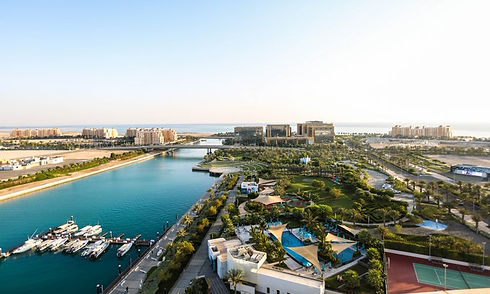
The first stone for King Abdullah Economic City (KAEC) was laid exactly twenty years ago, marking the birth of a metropolis built around one of the largest trading ports directly on the Red Sea. The Dakar arrives at KAEC in 2027 for the first time, with an XXL bivouac near the centre — sea view included — hosting scrutineering and the first reunion of the rally caravan.
The choice signals ASO's continued investment in Saudi infrastructure. KAEC, AlUla and Bisha now serve as anchor points for an increasingly polished spectator experience around the start, rest day and finish — bringing the modern Dakar closer to what European cross-country fans expect from a top-tier event.

The southern reaches — unfamiliar terrain
ASO Director David Castera flagged it in his Paris presentation: the rally will continue to venture into unfamiliar terrain, especially in the southern reaches of the country. Stage 11 into Al Bahah and parts of Stages 8 through 10 around Bisha and Wadi Ad-Dawasir cross terrain that previous editions either skirted or avoided entirely.
For privateers, this matters. New terrain means roadbook surprises — fewer reliable references from previous editions' notes, fewer "I've been here before" moments. Navigation skill becomes more decisive. Crews who rely on intuitions built up in the Empty Quarter will find themselves rebuilding that knowledge bank in real time.
What the Dakar 2027 route demands of privateers
1
Tyre management is the dominant strategic constraint
Two marathon-refuge days back-to-back (Stages 6 and 7), then a 100-km dune sector parallel to the FIM course in Stage 7, then the marathon stage block at Al Bahah-KAEC. Crews who run aggressive tyre setups for raw pace will pay the price.
2
Mechanical resilience matters more than usual
Restricted overnight service across two separate marathon configurations means anything that breaks must be fixable in the field, with whatever you carry on the car. Build philosophy and spare-parts loadout become competitive variables.
3
Navigation skill is back in fashion
Fewer landmarks on plateaus (Stage 3), labyrinth tracks in Nafud (Stage 4), 200 km of fiendish plateau navigation in Stage 10 — and the introduction of the Secret Navigation Test in the parallel Dakar Classic event signals where ASO is moving the discipline overall. Co-driver craft is no longer optional.
How to follow the Dakar 2027 route live
The ASO publishes daily live tracking via the official Race Center at dakar.com. During the 2026 rally, 6.1 million visitors followed the action in real time. TV broadcast reaches 70 channels in 190 countries with more than 4,000 hours of coverage.
We go further than the official channels.
Since the Dakar Rally 2022, TimeOut Racing publishes daily videos directly from inside the bivouac. We do not follow the fastest drivers. We follow the most compelling stories. The ones that happen behind the scenes, long after the cameras from the big broadcasters have packed up and gone home. We are where the other cameras are not. We show you what you will never see on television.
Watch on YouTube → youtube.com/@timeout-racing
Race the DAKAR 2027 — talk to us early
We have brought every single client to the finish line across four Dakar editions, with eight clients including returners. We accept a maximum of five clients per Dakar.
The Dakar 2027 route — with its marathon refuge, Al Bahah marathon block, and shift into unfamiliar southern terrain — demands earlier preparation conversations than recent editions. Vehicle selection, spare-parts loadout, tyre strategy and navigation prep all benefit from a longer runway.
If you are considering an entry to the Dakar 2027:
-
We handle ASO registration, scrutineering preparation and Barcelona shipment
-
We supply the complete safety pack pre-checked for ASO
-
You and your vehicle appear in our 6.2-million-view organic Dakar coverage as part of the package
We offer four service tiers from Bivouac Access (€8,000) to Dedicated Rally Assistance
Last Update: 09.05.2026